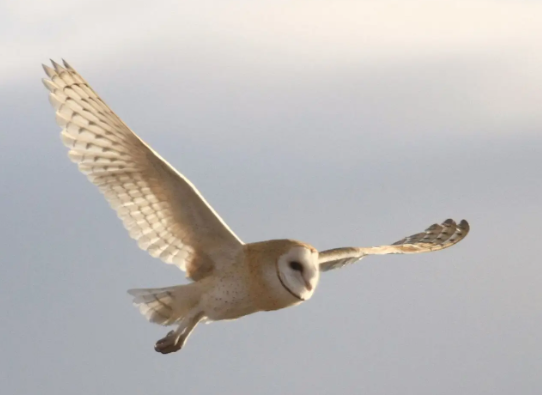
| A few weeks ago I was at Holme Dunes, a nature reserve on the north Norfolk coast, when I was treated to a wonderful sight. It was a grim day – rain, rain and more rain against the grey of the North Sea – but suddenly, out of the drizzle, floated a barn owl. It was my first ever sighting of this magnificent bird in the wild, and it was worth waiting for: a shining white face, flecks of brown on the wings, flying so low that it almost skimmed over the salt marsh. This part of Britain feels remote. For a start, it is not easy to get to. The dual carriageway runs out at King’s Lynn or Norwich, then it’s another hour of crawling, winding roads before you finally reach East Anglia’s northern fringe. Even then you have to trek through miles of mud, marshland and dunes before you get to the vast open sands of the coast. This wilderness is teeming with nature: 400,000 birds overwinter in the Wash. While at Holme, and a few miles up the coast at RSPB Titchwell Marsh, I saw a marsh harrier, hundreds of avocets and black-headed gulls, two species of deer, rare man orchids, a toad and many, many other birds that I could only guess at. This is a wild landscape battered by the wind, rain and waves, a corner of England where man’s dominance fades against the forces of nature. At least, it feels that way. When that barn owl, gliding over the marsh, disappeared from view, it turned out it had ducked into an old concrete bunker to shelter from the rain. And I discovered that the path I was walking on – remarkably straight and level – was a disused railway track. The whole reserve is, in fact, an old army firing range, used before the war to practise hurling shells into the dunes. The track had been used to move targets back and forth, and the old bunker held the engine that towed them. What I thought was a wilderness was actually an old industrial landscape. The whole of the Norfolk coast, in fact, is manmade — drained of saltwater more than 100 years ago and protected by sea walls. Even the RSPB reserve at Titchwell is artificial — a carefully managed mosaic of shallow freshwater and saltwater ponds, each drained, planted up and refilled in a cycle to ensure they retain their vigour. Wilderness, in a small island like Great Britain, requires constant management. Whether we like it or not, our whole country is made up of artificial landscapes. Even where they feel wildest — the Lake District, for example, or Dartmoor or the coasts of Cornwall or the western Wales — we have had a hand in shaping these lands over the centuries. That does not mean, of course, that wildlife cannot thrive here. I have spent probably more time than is healthy in the past few weeks watching footage of peregrine falcon nests, live-streamed from cathedrals up and down the country (you can read my piece about it here). In the 1960s peregrines were almost extinct in England, killed off by agricultural chemicals. But now they are thriving, and they are doing best in the tall towers of cathedrals and churches where they increasingly choose to nest. In the cathedrals of Derby, Lincoln, Wakefield, Worcester, St Albans, Salisbury, Ely, Leicester and Norwich, peregrine chicks have been fledging in the past couple of weeks – and it makes for captivating viewing. As Francis Hickenbottom, of the Wakefield Peregrine Project, put it, peregrines “like big stone things with knobbly bits. When they fly into a city and see a cathedral, that’s just another big stone thing with knobbly bits.” Add in a ready-made food source in the form of feral pigeons, and street lights that perfectly illuminate their nocturnal hunting grounds, cities make perfect homes for these birds. It is no secret that humanity’s footprint on the planet is growing. But where we tread lightly, there is no reason nature cannot thrive alongside us. |